
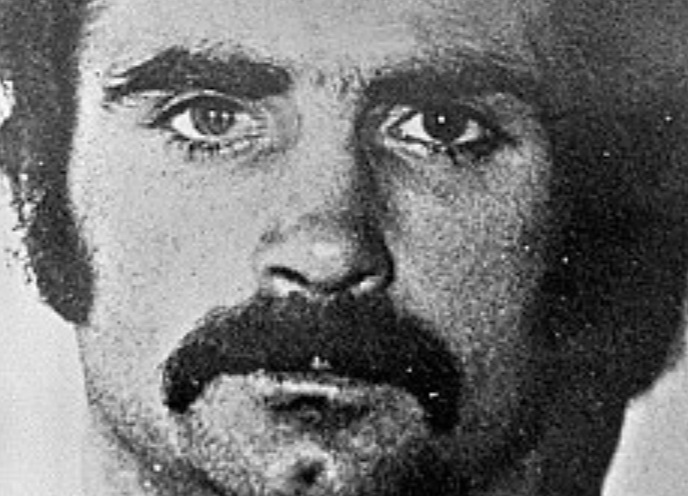
From the deepest desire comes the deadliest hate.
Socrates.
By Thom L. Jones for Gangsters Inc.
Stakeknife is a bricklayer by profession and a killer by choice. He’s an Irishman with an Italian name.
Someone, maybe Jesus, claims, “Throw out one devil and seven come rushing in, because the house of the soul is nice and empty for them.”
The man in this story would have found refuge in a place like this.
Ireland has always been a place where anxiety found a home.
In some ways, not unlike Sicily; both of them islands that endured generations of poverty, endless conflict, and a mother-home that cared little about them.
While Ireland’s population was divided along religious lines, its desire and need for independence was the engine of desire that drove its policy, politics, and terrorist agenda.
The Troubles, which the Irish call Na Trioblóidí, filled a vacuum that had been created almost 300 years before and lasted from the late 1960s until 1998.
Its origins lay on a bloody battlefield that had hosted the end of Irish republicanism, known as The Battle of The Boyne which happened on 11th July 1690, helping to end a war that had rumbled for eighteen months between two kings of England, William, and James, with Will being the victor.
A last battle in 1691 at Aughrim rendered the Jacobite forces under James into a hopeless position, and he fled the country, seeking refuge in Europe.
It was a conflict of many-layered complexities with still lingering effects in Europe, Britain and, of course, Ireland itself.
Before the war, English and Scottish Protestants colonized the country for a century during a period called plantation, which deeply divided Ireland.
Boyne, then Aughrim, were supposed to settle things.
For the next 200 years Protestants effectively ruled the country (although 80% of the population was Catholic) through decades of poverty, uprisings, and famines.
By the end of the 18th century, Protestants owned 95% of the land. The beginning of the 20th century saw things on the boil and the catalyst for the big change came with the Irish War of Independence fought between 1919 and 1921 by the IRA (Irish Republican Army,) and the British authorities: army, police, and auxiliaries.
The IRA and its political arm, Sinn Féin (Ourselves), fought the British to a standstill, and in December 1922, the Irish Free State was created with a northern domain, Ulster, or Northern Ireland, created as a part of Britain.
For forty-six years, Ireland and Ulster lived in uneasy harmony. And then, the walls came tumbling down.
The thirty-year war between the IRA and the British government and its forces, forever referred to as The Troubles, is fought across three landscapes: Ireland, Ulster, and Britain. Almost four thousand will die and fifty thousand will be injured as catholic fight protestant, Irish fight Irish, Irish fight British, and the devil watches and waits for his cue from the wings.
Not the mythical one with horns and tail, but the real one-Stakeknife. A man of mystery who would beget more mysteries: a Russian egg of intrigue who will confound investigators until the day he dies. And then afterwards.
Alfredo “Freddie” Scappaticci was born in Belfast in January 1946 to an Irish mother and Danny Scappaticci, who had been born in 1919 in Northern Ireland to Bernardo Scappaticci and Maria Magliocco, who had immigrated here from Italy. Danny started an ice-cream business, and then graduated to a shop selling fish and chips.
Freddie, one of five children living on Joy Street, grew up to be a small, five-three, barrel-chested man with dark-olive skin and black, wiry hair. He loved football, like so many Englishmen; his favourite clubs being Notts Forest and Manchester United.

Following an uneventful childhood, he left school and trained to be a bricklayer, living and working in the Markets area of South Belfast. He also operated, like his father, a van selling ice cream. A builder with gelato in his blood. Who became a killer, with lots of blood following him everywhere.
Gifted or damned with a volcanic temper, he was often in conflict with the police. He was described as having an air of menace and as someone free with his fists. Locals recalled he was a bully who regularly abused his young wife, Sheila Cunningham. They married in 1966 and produced six children. For some reason, she stayed with him until the end.
Like many of his peers in the dark underworld of Belfast, Scappaticci was a thug-a product of his environment, basting in the flavor of extreme politics through devious social exploitation by fanatics raised over generations of hate and distrust, politically and religiously.
Although interpretations vary, most agree The Troubles began with a protest march against government sectarian housing policies on October 5th, 1968, in Londonderry, Northern Ireland’s second largest city.
And one dominated by those who followed the Catholic religion.
The police literally battered the protest march, banned by the authorities, off the streets. Only one television camera team catches the action, but it’s enough to ignite interest across Ireland and the world and sow the seeds of terror that would grow into bushels of hate and agony for so many people.
The British Government was caught napping because the world viewed them as running an apartheid system against Irish Catholics which Nelson Mandela and Bishop Tutu both claimed was than anything apartheid-era South Africa had created.
It also helps to establish the training ground for Sinn Féin policies and the IRA’s terrorist agenda for years to come in their fight to unify Ireland and drive out the British.
Scappaticci is dragged into these early days of conflict, joining the Provisional IRA in December 1969 at its birth. Often referred to as “The Provos,” this was a break-away faction of the official IRA (OIRA.) Although both groups were bent on creating an united socialist Irish republic, the Officials leant towards parliamentary tactics and shunned violence, while the “Provos,” believed that violence—particularly terrorism—was an indefensible component of the fight to rid Ireland of the British.
In 1971 Freddie was arrested and imprisoned, without trial, at the infamous Long Kesh Prison, along with over 300 other suspected Irish terrorists.
Operation Demetrius was a British Army operation in Northern Ireland on 9–10th August 1971, during the Troubles. It involved the mass arrest and internment of people suspected of being involved with the Provisional Irish Republican Army.*
Among the prisoners who befriended Freddie in the slams, was one who would have a significant impact on the future of him and Ireland: Gerry Adams, one day to become head of Sinn Féin, and its most prominent spokesperson for over thirty years, as the bitter war of words and lead and bombs dragged on and on.
Although he denied ever being part of the IRA, police and informants claim he was the force’s Adjutant General between 1978 and 1982.
By 1980, Scappaticci was a leading member of the IRA’s Internal Security Unit (ISU) for the Northern Command, set up, it has been alleged, by none other than Gerry Adams.

Freddie’s Republican associates, who struggled with his Italian name, called him “Scap.” The unit’s function is counter-intelligence and the investigation of suspected informants, men they call “Touts.” Sometimes “Brussels sprouts,” a slang substitute.
‘Touting,’ the adjective, was the ultimate betrayal. Irish republican people believed it quite acceptable for the IRA to take the life of anyone in the pay of the British Army intelligence system.
ISU has another sobriquet- The Nutting Squad-referring to the way suspects were disposed of by being shot in the back of the head; the “nut,” a slang term for head, dating back to the 19th century in Britain. It has been claimed that the squad murdered over 70 suspects during the time of the Troubles in Northern Ireland.
They were not just a bunch of killers on demand but “an electrical junction box through which every wire must flow,” according to Samantha Newbury of Salford University, giving its senior members access to people and information throughout the IRA.
We don’t know how many people died either by Scappaticci’s hand or through his direction. Some sources claim he was involved in the murder of 18 IRA members suspected of cooperating with the British authorities. Other members never felt he was truly committed to the political or religious cause—he got involved because he loved violence.
One of his near-victims, a man called Sandy Lynch, has confirmed Freddie’s ferocity. He claimed Freddie had told him that if he had his way, he would be hung upside down in a cowshed and no-one would hear him squeal as he was skinned alive.
Lynch was being held captive in January 1990, in an ISU safe-house in West Belfast, when police arrived and rescued him. An intelligence officer in the unit, he was also a paid informant working for the British Special Branch.**
The British Intelligence Force Research Unit (FRU) was endlessly recruiting Republican members of the IRA as paid informants to help them infiltrate and destroy the Sinn Féin infrastructure. Lynch was unaware that the man threatening his life was not what he seemed. Nothing really was. The very nature and structure of the IRA meant that not only was internal corruption and infiltration almost inevitable, but it was almost a certainty.
The Brits knew Sandy was about to be kidnapped. They had, in fact, warned Lynch to hold firm. Rescue would arrive. And it did, the day after Scappaticci left the house. Freddie of the unpronounceable surname, was not just heading The Nutting Squad, he was also a double-agent squared, working for the shadowy British intelligence, a man they referred to as “Stakeknife.”
They were using Lynch to snare another, bigger target, Danny Morrison, the publicity director of the IRA, who arrived at the house on Sunday night, January 7th, and was swept up in the police and army raiding party sent to rescue Lynch.
There were so many intelligence agencies operating in Northern Ireland during the Troubles, it’s hard to keep track of them: the British Army, the FRU, MI5, MI6, the Special Branch of the Royal Ulster Constabulary (RUC).
All of them overlapping and stepping on each other’s targets, creating their own informants, tracking each other’ suspects, and at times, killing people, using a shoot-to-kill policy that was tacitly accepted by the authorities in charge of the British government’s law enforcement in Northern Ireland.
In the name of the British people, these agents were carrying out a dirty war and directing state terrorism. In 1986, the head of the RUC, Raymond White, held a meeting in Northern Ireland with Prime Minister Margaret Thatcher, seeking clarity regarding the handling of undercover agents and informers. When covering the shoot-to-kill policy, Thatcher instructed, “Carry on what you’re doing, but don’t get caught.”
British counter-insurgency depended on prohibition, surrogate violence, and intelligence supremacy. They followed a doctrine honed in using irregular forces to destabilize insurgent communities while insulating the state from accountability. Northern Ireland became the breeding ground for this policy.
Dark units such as the Military Reaction Force, The Special Reconnaissance Unit, and later the Force Research Unit, operated in a no-man’s-land between intelligence and murder. Their purpose was not only to gather information but to mold the conflict environment.
Freddie Scappaticci’s connection to these groups developed through his friendship with a British soldier, a man called Peter Jones.
The traditional version, commonly accepted for years, was that Scap approached the British after an IRA rival badly beat him after having an affair with the man’s wife; his motive being revenge. The army commander in Northern Ireland, General Sir John Wilsey, had a different interpretation, referring to him, as “the goose who laid the golden egg,” claiming Scappaticci was encouraged into becoming an informant by Jones, a staff-sergeant in the British Army attached to the Devonshire and Dorset Regiment.
It’s a long, complex story outside the scope of this narrative, and if true, happens as early as 1976. It is Jones who gives Freddie his code name Stakeknife and official number-5027: the name reflecting his role—cutting into the heart of the IRA to destroy it from within.
The government will pay this informant well over the years he works as a double-agent, some sources claiming £80,000 a year. Equivalent in today’s money to about US$460,000.
The average house in Belfast in this time frame sold for under £4,000.
If this information is on the mark, the double-cross was a lucrative sideline to his other nefarious activities such as murder, the illegal tax-scams he committed as a builder and his takings from armed robberies carried out to refit the coffers of the IRA.
For twenty years, Freddie lived this dangerous double life of IRA enforcer and British spy.
In April 1994, the IRA declared a temporary ceasefire.
Between then and 2005, there were multiple attempts trying for a permanent ending of The Troubles, which was finally determined on July 25th. Gerry Adams called for the IRA to lay down its weapons. It would not disband; rather, rather look for peaceful means to achieve its objectives, a united Ireland.
Twenty years later, that appears as distant as it was in 1968 when protesters marched in Londonderry. In July 2007, the British Army formally disbanded “Operation Banner,” their campaign against the IRA, which had existed for almost forty years. One of Britain’s longest wars had been carried out mainly on its own soil. Ignatius Harte, brother of Gerard, an IRA soldier killed in an ambush by the British Special Air Service in 1988, claimed:
“All wars are dirty, but this was an exceptionally dirty one.”
In 2003, an Irish journalist, Greg Harkin, working with a former army intelligence officer, Ian Hurst, revealed in The Sunday Times newspaper that Freddie Scappaticci is “Stakeknife.” Following a press conference where he denied the allegation, Freddie left Belfast, moving to England and a life under the protection of the British government, with a home in Guildford, Surrey, and an expensive Mercedes in the garage.

He will return to Belfast one last time in 2019 to attend the funeral of his wife, Sheila.
In November 2023, Sir Ian Livingstone, a former chief constable, took over “Operation Kenova,” a complex and wide-ranging investigation which was created to investigate allegations of murder, kidnap and torture involving 101 persons, dating back to the 1970s across Northern Ireland. Following its launch in 2016 and an interim report, the research team undertakes further investigations at the request of the Police Service of Northern Ireland, which tracks it over the next nine years.
In the 164 page report published at the end of 2025, Kenova, (which cost the British taxpayer, over £47 million,) there are 319 references to Stakeknife, and 58 to Freddie Scappaticci, but nowhere does the document confirm any connection between the two. This, apparently, is at the instruction of the British government.
The Kenova Report, however, claims that the circumstances of the Stakeknife case are exceptional and there should now be official confirmation or denial of the claim that he was Frederick Scappaticci. But that was where it ended. Bureaucracy trumps everything.
Lawyer Kevin Winters, who represents the families of 12 victims, said the report was “a damning indictment of the state”.
“The staggering takeaway message is that the state could have intervened to save lives,” he said. “We are left with the horrendous conclusion that both state and the IRA were co-conspirators in the murder of its citizens.”
In December 2018, Freddie, now known as Frank Cowley, (some sources claim Conway), was sentenced in Westminster Magistrate’s Court to three months in prison, suspended for one year, for possessing extreme pornographic images involving animals. This court appearance followed his arrest by police involved in the Kenova inquiry.
His laptop, seized by a police investigation earlier in the year, had revealed the incriminating evidence. Ironically, magistrate Emma Arbuthnot claimed, “You have not been before the court for 50 years—and that’s good character in my book. I can see you are not a well man at all, with serious health issues and that you lead a lonely life.”
The shabby, overweight little man, in a grubby blue fleece top and green tracksuit pants, left the court on Marylebone Road a free man. The way things had always been, for one of the IRA’s most deadly operators, and Britain’s most confusingly double agents, both working in a landscape that seemed more appropriate to a make-believe Hollywood movie than a civil war that almost destroyed Britain.
Freddie dies at age 77 just before Easter, on March 20th 2023. He had been ill off and on for some time, suffering several strokes. He had lived mostly in England, in or around Manchester, where a brother lived, and his last home was somewhere in Cheshire. He was also close to his beloved Man U football club.
Following his death, the High Court ordered that his will be sealed, not open for general inspection as is usual, for 70 years. This is the first time this has been done for anyone other than a member of the royal family.
The head of the court stated: “There is nothing in the will, which is in fairly standard form, which could conceivably be of interest to the public or the media.” He added that there was “the need to protect the applicant, and those named in the will, from the real risk of serious physical harm or even death because they might be thought to be guilty by association with the deceased.” This was demonstrated, the judge observed, by “the real risk to his life and wellbeing which the deceased faced in his lifetime”***
Scappaticci and his alter ego are now part of history. Although the odds are he was what we think he was, there will always be a lingering doubt, a worrisome niggle. Could he still be out there?
I’ll leave the final word to another lawyer Michael Finucane, son of lawyer Pat, murdered during The Troubles.
Insteadof devoting resources toward the search for a peaceful solution, the government was obsessed with securing the defeat of republican paramilitaries, whatever the cost. They armed and assisted loyalists in order to do so. One line after another was crossed and, eventually, the line between right and wrong disappeared completely. Neither the law of the land nor human life itself was respected. This was your government’s policy. If it had happened in Britain, there would be an outcry. But it happened in Northern Ireland, so no one cared.****
Sources:
Numerous articles on the web, many books, and above all, The Kenova Report, are the basis of this story.
* Long Kesh security prison and internment camp, also known as HM Prison Maze, was situated near Lisburn, nine miles south-west of Belfast, the major city in Northern Ireland, on a former Air Force station. It was created to house paramilitary prisoners, Republicans and loyalists, operating from 1971 to 2000. Notorious for its brutal conditions and endless conflicts, at least 10 Republican inmates died here from hunger strikes. In 1978, the British government was found guilty and censured by the European Court of Human Rights for “cruel, inhuman, and degrading treatment in the interrogation procedures committed at the prison.”
** During the Troubles, British Special Branch, part of the Royal Ulster Constabulary, ran extensive covert operations, focusing on infiltrating paramilitary groups (IRA, loyalists) via informers for crucial intelligence, leading to significant successes but also intense controversy, particularly concerning agent handling, collusion allegations, and “shoot-to-kill” claims, shaping the secret war with deep penetration into republican and loyalist cells. Source: Google AI.
*** Will of man suspected of being army’s top IRA spy Stakeknife to be sealed, high court rules. The Guardian. 28th July 2025.
**** They Killed My Father. Michael Finucane. The Guardian. 13th February 2001.
- Back to the Organized Crime in Europe section or Thom L. Jones’ Mob Corner on Gangsters Inc.
- Check out the latest news on organized crime and the Mafia at our news section
- About Gangsters Inc.
Copyright © Thom L. Jones & Gangsters Inc.

Leave a Reply