
By Organized Crime Investigative Journalist Clarence Walker for Gangsters Inc.
Back in May, President Donald J. Trump handed a Hail Mary lifeline and commuted the federal prison sentence of Larry Hoover, one of Chicago’s most notorious gang leaders. One roadblock down on the federal side is gone. But it’s not over. There is one more roadblock to clear on the state side.
Hoover still face up to 200 years in Illinois state prison.

As supporters rally for the release of Larry Hoover, the co-founder of the Gangster Disciples, many are left wondering why he remains incarcerated under laws considered outdated and discredited. With a complex history spanning decades, Hoover’s case highlights some of the worst pitfalls within the Illinois state justice system.
On October 22, Hoover and his legal team requested clemency from Illinois Governor JB Pritzker. The former gangster disciple leader claimed that although he’d been “lost in an enduring pattern of criminality,” he had changed in the decades since his imprisonment. If Pritzker issue the commutation Hoover will exhale the air of the free world after serving a half century in prison.

“My father has suffered multiple heart attacks from being forced to perform hard labor despite his age and medical condition,” said his son, Larry Hoover Jr., in a statement to ABC News “All he wants now is to come home, spend what time he has left with his family, and use his experience to help bring peace to the same communities he once came from.”
In 1973, a jury convicted Gangster Disciples leader Larry Hoover of murder and handed down a sentence beginning at 150 up to 200 years in Illinois state prison. Decades later, a separate federal jury found Hoover guilty of operating a criminal enterprise while incarcerated in state prison and given six life terms in federal prison in 1997.
Even while incarcerated, Hoover’s impactful reputation flourished. To begin his rehabilitated odyssesy, Hoover formed a political action committee, then he created a fashion line, and his life story inspired popular rap lyrics. On the other hand, the case of Larry Hoover emerged as a significant and polarizing topic within the realms of criminal justice, oppressive prison terms, unjust state parole laws, and Hoover’s quest for redemption.

The Rise of Cause Celebre
Hoover’s story has drawn attention far beyond Chicago. In 2021, rappers Kanye West and Drake set aside their long-running feud to headline the “Free Larry Hoover” benefit concert in Los Angeles, calling attention to criminal justice reform and urging compassion for aging inmates like Hoover. West, a Chicago native, had previously advocated for Hoover’s release during a 2018 meeting with Donald Trump in the Oval Office, news media outlets reported.
- READ: Can UFC star Conor McGregor get President Trump to order the DEA to back off the Kinahan Cartel?
That public support has continued to grow. Among those backing Hoover’s clemency bid are civil rights leaders Jesse Jackson Sr. and the Rev. Al Sharpton, Rep. Jonathan Jackson, Chance the Rapper, Judge Greg Mathis, and Pulitzer Prize-winning journalist Yohance Lacour and former U.S. Secretary of Education Arne Duncan.
Alice Marie Johnson, Trump’s current White House pardon czar, who also serves as CEO of Taking Action for Good offered her support as well for Hoover. Johnson wrote in a letter in the filing to the Illinois review board that Hoover is repentant and has the potential and the desire to live the rest of his life as a force for good in his community. She added that if he were released, she would personally help support his reintegration into society.
A Plea for Clemency
According to Hoover’s lawyers, the former Gangster Disciple leader experienced three heart attacks while behnd bars in the federal system after his recent transfer to a state penitentiary earlier this year, the most recent of which occurred in September. His condition is described as precarious in a recent filed court petition with the prison board, and his treatment is described as “a slow, state-sanctioned death sentence.”
Hoover’s attorneys are pleading with Governor JB Pritzker to follow the federal government’s lead, acknowledge Hoover’s change, allow him to spend his remaining years in freedom with family.
Ron Safer served as the head Assistant U.S. Attorney prosecutor in Hoover’s 1997 federal conviction. Without missing a beat, Safer told ABC News Chicago station WLS that he was disappointed Hoover was granted federal clemency.
“I believe in redemption. I believe in rehabilitation. I believe in mercy. There are some crimes that are so heinous, so notorious, that they’re not deserving of mercy,” Safer stated. Commenting on Hoover’s influence to execute violence, Safer said in a strong tone of words. “If Larry Hoover said there was going to be a killing, there was a killing.”

Hoover Breaks Silence
At the heart of the filing, according to ABC News WLS are Hoover’s words, breaking his silence for the first time in 25 years in two deeply personal letters to an as-yet-assigned judge and to the public, offering a window into his remorse, aging and reckoning.
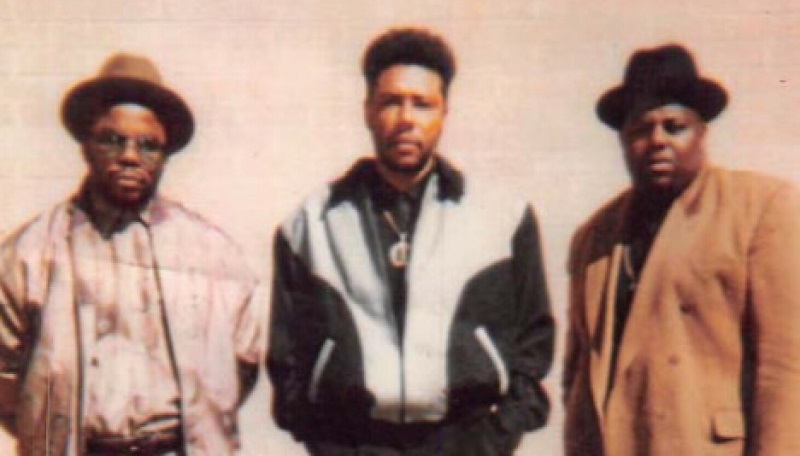
“People, when writing about me in the papers, always use photos of me depicting the way I appeared 40 years ago, as if I’m still a young, strong and rebellious gang leader. That man no longer exists,” Hoover wrote in a typed letter to the judge. The letter is undated.
“I am no longer the Larry Hoover people sometimes talk about, or he who is written about in the papers, or the crime figure described by the government,” he wrote. “That man has over these many years transformed into the man I am today. It is true that some men never learn, or that prison makes some into monsters; I’ve seen it, but for me, over time, prison — this prison in particular — became a place of reflection.”
In a separate undated letter addressed to the public, Hoover wrote, “I have come to realize that with my silence over these years I have done myself a grave disservice.”
“I have been involved, and in fact, had initiated, I cannot avoid taking responsibility. With this responsibility, now being able to honestly assess and appreciate the magnitude and scope of the harms my actions had wrought, I cannot help but to have immense remorse,” Hoover wrote.
In his heartfelt letter, Hoover expressed deep remorse for the harm his past actions caused, saying he had wasted his talents on choices that hurt Chicago, his community and society. He emphasized that he has long renounced all ties to the Gangster Disciples and any form of criminal activity, declaring that he wants nothing to do with that life “now and forever.”
No Chance of Re-offending Hoover Says
After more than five decades in prison, including over 25 years in isolation, Hoover said, there is no chance he would reoffend, noting that most men his age devote their final years to steering others away from crime. He said he hopes to spend his remaining time honoring a promise he made to his late mother not to waste his final years.
His letters center on a petition written by his lawyers and filed on his behalf that portrays a man shaped by decades of confinement, failing health and personal reckoning. His attorneys argue that half a century behind bars has already fulfilled the purpose of punishment and that his rehabilitation stands as proof of transformation.
Hoover’s lawyers note that he has not committed a serious infraction during his decades in prison and has completed more than 100 educational and rehabilitation programs.
Will Hoover’s Possible Release Reopen Chicago’s Old Wounds
WLS News in Chicago reported that detractors, including some former prosecutors, law enforcement officials and community anti-violence advocates, argue that Hoover’s release could reopen wounds in Chicago neighborhoods still scarred by gang violence.
They maintain that, despite his renunciations, Hoover’s name still holds symbolic power among some Gangster Disciples factions.
Chicago FBI Special Agent in Charge Doug DePodesta said in a statement to WLS news in May that “Larry Hoover caused a lot of damage in Chicago. He was also convicted on state charges and is likely to continue serving time in state prison where he belongs.” Hoovers supporters counter that his transformation and the decades he has already served show a man committed to peace, not power.
Hoover Still Serving Time Under Abolished Illinois Parole Law
Yet despite President Trump freeing Hoover from an excruciating bondage of multiple life federal sentences, combined with irrefutable proof of Hoover’s rehabilitation, Hoover, at the age of 74, remains imprisoned under a law in Illinois that’s been abolished for over 45 years!
A former federal prosecutor noted that in a state that spawned Al Capone, the prosecutor said he could not think of a more notorious criminal than Hoover. But Hoover’s family, closest friends, and die-hard supporters insisted a person can change if they ask God to give him/her the wisdom and strength to make a conversion.
What everything boils down to is the renewal of one’s mind, and, one friend, rap music mogul, an entrepreneur and highly successful boxing manager James “J” Prince said that over the years he’d seen the positive change in Brother Hoover. Prince further said that he hope the past notoriety of Hoover’s state and federal criminal cases doesn’t create an atmosphere of unfairness and unrelenting bias designed to blind authorities to the reality of a man who has forsaken his former troubled life.
Illinois Parole Law
But here’s a bigger problem Hoover supporters and attorney point out: Under Illinois newest parole guidelines, those new guidelines doesn’t apply retroactively, which yield very little help for Hoover. Yes, Hoover’s attorneys’ argued; it is true that Larry Hoover is still serving 150-200 years behind bars on a state conviction under a highly questionable Illinois parole law that, in essence, no longer exists. This extremely harsh law is called the “C-Number”—an indeterminate parole system. What people must understand is that Larry Hoover, in actuality, under Illinois indeterminate sentencing, is dealing with another walking death sentence.
Mr. Hoover has been in prison for 52 long years. In this article, as an investigative journalist, I will highlight the evidence proving that 51 years ago an axe murderer from Illinois who got 800-2,400 years in prison has already made parole, while Hoover’s sentence is much less than 2,400 years, he is still locked down. Hoover’s conviction stems from a 1973 homicide case in Chicago, where the rats ate his flesh and spit him out to the police and prosecutors to save themselves. As everything stands today, Hoover is eligible for parole because of his conviction under the “C-number indeterminate, a discretionary parole review,” which, as previously stated, is a unique kind of parole process that state officials abolished in 1978.
For example, other Illinois state prisoners like Hoover who’d been sentenced to 150-200 years or more, those same prisoners served less than 23-25 years behind bars. Eventually they were released into the free world. I will discuss this catch-22, oppressive parole process further in my commentary. Since it’s been proven that Illinois’ indeterminate parole law has been abolished and that Hoover done served more than enough time to satisfy the requirements of this harsh parole process, we have too many big questions that do not invite simple answers. So, Hoover’s supporters. looking through the mirror of fairness is desperate to know: why Larry Hoover remain in prison.
“C-Number” Indeterminate Sentencing System
The “C-Number” indeterminate sentencing law, established in Illinois, allowed life sentences without a fixed term. This means that individuals like Hoover were sentenced to life imprisonment with the possibility of parole, but without a clear timeline when he’d be released from prison. Such a system often left inmates dangling in a state of uncertainty; the outcome of their fate hung in the balance by the parole board’s discretion.
Parole Eligibility Under C-Number System
Under the old” C-number” parole system, inmates could technically get parole after serving 11 years and 3 months. But starting in the late 70s and early 80s, the Illinois Prisoner Review Board (IPRB) started using 25 years as an unofficial guideline for maximum time served, particularly in murder cases. This stark change meant that even for people like Larry Hoover, based on the calculated prison time, the IPRB added extra unofficial requirements that weren’t written into law.
Politically speaking, the public’s perception of these cases involving well-known convicted defendants and the needless delays imposed by the parole board can make it nearly impossible for some inmates to be released within a timely manner.
Indeterminate Sentencing Impact
Critics say it doesn’t take a rocket scientist to show that Illinois indeterminate sentencing guidelines disproportionately impacted marginalized communities and caused mass incarceration of people of color. Thus, prisoners like Hoover had a difficult time proving they’d been rehabilitated for parole under the indeterminate sentencing guidelines. A sensible argument can be made that these institutions’ ‘lack of accountability’ and transparency results in injustice.
Illinois Accountability Theory
The formerly broad legal doctrine known as the Accountability Theory; a legal statute that Illinois expanded to tip the scales towards ‘Trap All tha Crooks’ which laid the foundation for prosecutors to win Hoover’s first state conviction. My study indicates that Hoover was found guilty under the Illinois’s Accountability Theory. This same theory allowed the courts to convict people such as Larry Hoover, who, at the time, in 1973–was charged with the murder of William “Pooky” Young.
Illinois Accountability Theory is similar to facing a firing squad. One of the silver bullets will strike. The Accountability Theory is based on alleged group involvement or influence, even if the accused wasn’t a direct participant in a violent crime nor if the accused assisted an accomplice to commit a violent crime. Bottom line: it didn’t matter if a person wasn’t present at the scene as long as the law connect the person into a conspiracy with others to execute a murder.
Based on court evidence Larry Hoover wasn’t at the scene when the homicide in question went down on February 26, 1973. Bad news for the Gangster Disciple, the state’s star witness Larry Leverston testified he was ordered by Hoover to kill Pooky Young. Ironically, Andrew Howard, the actual killer of Pooky Young was released in 1992, while Hoover remain incarcerated under the outdated Accountability legal principle.
Important Details to Remember About Hoover’s 1973 Conviction
As mentioned, Hoover conviction predicated on:
- Illinois Accountability Theory, which held people legally responsible for crimes committed by others within a group and if they wielded “influence” or act as a “leader.
- Hoover was not the shooter,
- Nor was Hoover at the crime scene, and there was no evidence he ordered the hit except for the word of an informant also charged in the gangland murder.
Recent Law Reform
In 2022, Illinois enacted Public Act 102-1128 to reform its’ Accountability laws. The new law limited how the theory could be applied in serious cases and the threshold now requires clearer evidence of intent, active participation, or presence at the time of the crime for murder convictions. Therefore, how is the Recent Law Reform Relevant to Hoover’s Case? Under the reformed act, legal experts and advocates argue that Hoover’s 1973 state conviction would not stand today because the evidence used at the time in 1973–did not meet the new, stricter requirements.
After serving 52 years behind bars, despite exceeding both the initial requirement of having to serve 11 years and 3 months including the applicable 25-year minimum, Hoover’s ongoing incarceration under a discretionary, defunct system serves as an example of how parole eligibility evolved from the concept of ensuring a conviction based on testimony from an accomplice to a symbolic one with higher standards of proof.
Illinois C-Number Inmates Already Paroled
According to a Chicago Sun-Times review of Illinois Prisoner Review Board data, the reporters discovered approximately 50 aging inmates with C numbers had been paroled between 2010 and 2020. The article highlighted that ten of the C-Number parolees had been sentenced to longer prison terms than Hoover, who received 150-200 years in state prison. These 10 inmates in question even won parole over the objections of prosecutors and victims’ families.

Due to severe health problems, several other C-number inmates died in prison. Most Notorious C-Number Inmates Paroled Among the most notorious C-number inmates paroled in recent years, according to the Chicago Sun-Times are:
- Axe murderer Otis Williams murdered two people in Illinois in 1974–to stop them from telling police about the meat, candy, cigarettes, vegetables, and fruits he’d stolen from a store. Williams and his fall partner got the longest ride: 800-2,400 years in prison! After Williams appeared 30 times before the parole board, he finally won his freedom with a vote of 11-4 in 2013.
- Cop killer Johnny Veal, who murdered two police officers at Cabrini Green Apartments, was paroled in 2021. He’d been serving a 100-199 prison sentence under Illinois C-Number parole guidelines.
- Joseph Hurst murdered a police officer and severely wounded a second officer. A judge sentenced Hurst to 100-300 years in prison. Hurst also made parole in 2021.
- Mass killer Carl Reiman given 50-150 years behind bars was granted parole in 2018
- Ruben Taylor, a member of the De Mau Mau gang, murdered four Barrington Hill family members in 1972. A judge sentenced Taylor to 100-150 years in prison, including 20-60 years for armed robbery. Illinois paroled Taylor in 2018.
- Jerome Zapp murdered a doctor and got hammered with a 200-to-300-year sentence in prison. The Illinois parole board released Zapp in 2018.
- Calvin Campbell had been serving a 100-300-year prison sentence for the murder of a sheriff’s deputy. Campbell stole a measly $2 from the deputy as he lay dying. Campbell won parole in 2015.
Since a notorious killer can be paroled on a sentence of 2,400 years, way more than Hoover’s 150-200 year term, supporters keep asking the million dollars question: why is Hoover still in prison under Illinois defunct and discredited standards.
In his own words, Hoover wrote, “I want my legacy to be peace. I want my name to mean growth, not destruction. I want to be remembered not as who I was, but as who I fought to become.”
Organized Crime Investigative Journalist Clarence Walker is based in Houston, Texas. He can be reached at crimebeat360@gmail.com
- Back to the Black organized crime section or Street Gangs section on Gangsters Inc.
- Check out the latest news on organized crime and the Mafia at our news section
- About Gangsters Inc.
Copyright © Gangsters Inc.



Leave a Reply