
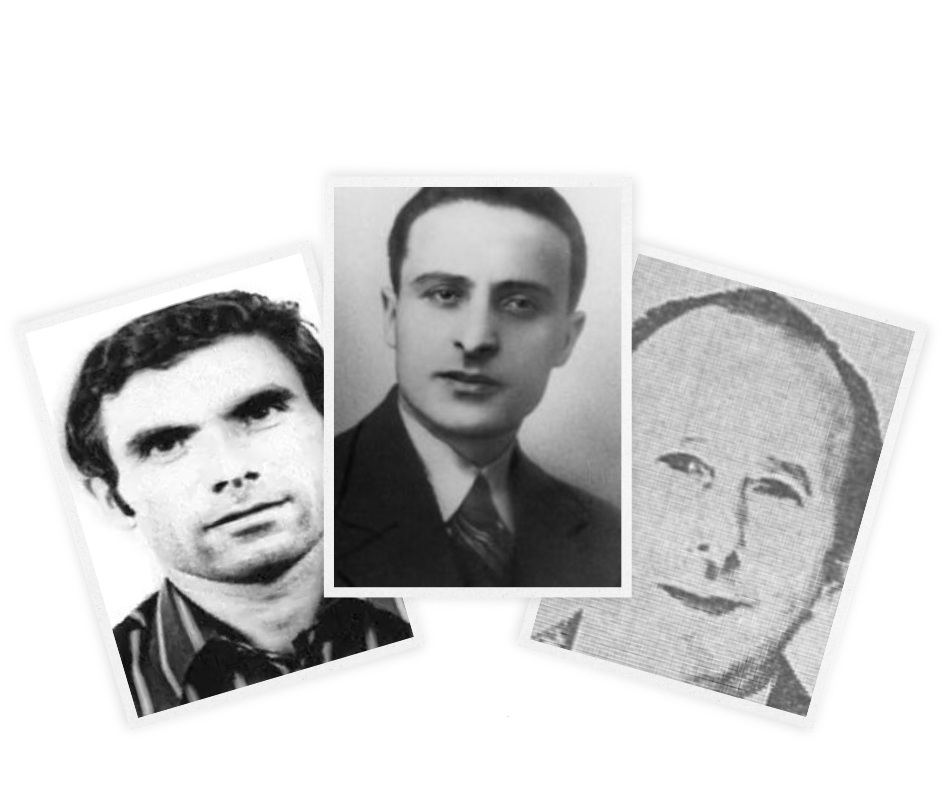
By Thom L. Jones for Gangsters Inc.
Enter rumour, painted full of tongues.
Henry IV, Part II. William Shakespeare.
The murder was not so much about dispatching a victim as removing a piece in a complex game of Mafia chess. Cosa Nostra’s politics reveal the entrenched power dynamics and prestige battles of Sicilian clans as they fight for dominance.
On a miserable Thursday evening, January 10th, 1974, Angelo Sorino is making his way to his home on Via San Lorenzo. He’s hustling an umbrella against the wind, fending off the rain. Close to his apartment, as he crosses the road, someone moves out of the shadows, following him. The man is a Mafia killer, and he steps close to Angelo, firing a .38 revolver twice into his victim’s back; then two more shots into the body as it sprawls on the rain-soaked asphalt.

A small Fiat 500 pulls up, the shooter jumps in and the car speeds off into the darkness of Palermo, Sicily’s biggest city. The heartland of the Mafia; a ferocious, greedy, and deadly institution, Cosa Nostra speaks little (the viddani don’t trust themselves to speak) and shoots a lot.*
Giovanni Falcone, the judge they killed in 1992, claimed, “The Mafia is more than a simple criminal association. It’s a world apart. Only those who live inside it can really know how things are.”
How it has always been since the viddani became estate managers generations ago on the huge baronial estates of Sicily, and recruited gangs to enforce their control.
The man who dies this night in January is Angelo Sorino. He is sixty-three and a retired civil servant. Born in Monopoli in the region of Apulia, on the Adriatic coast, he decided on a career in law enforcement. Graduating from the State Police college at Caserta in Campania, he moves to Sicily to work from the station in Resuttana. He will operate from here for 34 years, rising to the rank of marshal, a non-commissioned rank, before retiring in January 1973. He is married with four children.
Resuttana and the neighboring suburb San Lorenzo, located to the north and west of the city, are infested by Mafia clans that originated in the 19th century. Sorino had spent his working life investigating organized crime and creating background and intelligence on these groups throughout his police career. Retired, he still maintains contacts and informants he meets at bars and cafes and street markets, who feed him information, which he shares with the officers working the beat. The Mafia killed him before he became more dangerous than he had been while in uniform.
And this is where the politics of Cosa Nostra comes into play.
The Commission, the Mafia’s governing body made up of clan leaders, determines a major killing, especially of a state worker, even one retired.

Gaetano Badalamenti headed it at the time of Sorino’s murder, and Filippo Giacalone, the boss of San Lorenzo, was among the ten members. Men loyal to Stefano Bontade, also a member, dominated the group. Only Nenè Geraci, boss of Partinico, a provincial town twenty miles west of the city, is an ally of Salvatore Riina at this time, a man less known to the public and even his peers across the island. He’s a bear waiting to be prodded, so all hell can be let loosed.
Bontade ran the strongest neighborhood clan in Sicily-Santa Maria di Gesù-and was a mortal enemy of Riina, who emerged and grew powerful under his mentor Luciano Leggio, who in January 1974, was in Milan, calling himself Antonio Ferruggia, running a kidnapping gang from a wine shop. He’s arrested in May that year, and sent to prison for the rest of his life, at which point Riina becomes the undisputed boss of the Corleone clan.
- READ: La Primula Rossa: The story of Luciano Leggio
The killing went down in Giacalone’s district, who knew nothing about it until after the event.
Men of honor use terms like infame-infamous and sfregio-an offence to a Mafioso’s authority, and they apply to the action taken to kill the police officer. Someone had organized his murder without consulting Giacalone. This shows a conspiracy and a deliberate attempt to cause him not only embarrassment but also to place him in a dangerous position with the law.
Which responds accordingly.

The authorities investigate Giacalone, and the law holds him in prison while he awaits trial as a suspect in the murder. Lies are a dissonance between statement and fact, but it sometimes takes a while to expose them. Men of Cosa Nostra spend their lives developing this talent. Although by tradition, Mafiosi are supposed to always tell the truth among themselves, they are also experts at bending their principles of engagement.
The killing, the conspiracy, the political shenanigans, are emerging out of the hills, in the highlands of Palermo Province, from the town of Corleone. Salvatore Riina assembles his strategy here, as he gathers his barbarians at the gates.

Angelo Sorino in his information gathering, has discovered links that connected Riina to Giuseppe Giacomo Gambino, a powerful ally, who will become boss of San Lorenzo in due course, and his brother-in-law, and close associate, Giovanni Pilo.
A man embedded in Mafia events. Pilo, at 83, last went to prison in 2023 for five years following a judgement over Mafia, bribery, and drugs in Brancaccio, a hard-scrabble, industrial suburb south of the city.
Gambino who will become head of Riina’s “fire-team” used to deadly effect during the Mafia war of the early 1980s, will end his life by suicide while in prison serving multiple life sentences.**
The murder of Sorino is triggered for two reasons: To remove a stone in the shoe of Riina, by striking at Giacalone, who was close to Stefano Bontade, and eliminate the threat of dangerous intel being gathered by Sorino, getting to the police.***

Sicily witnessed three major Mafia wars during the latter half of the 20th century:
Between 1958 and 1963, it was the men of Corleone against each other.
In 1962 and 1963, it was the Parlermitani against the Parlermitani.
From 1981 to 1983, it was the Corleone gang and their allies against everyone.
In the third, Riina, the master manipulator, handles the strings like Don Gaetano Greco, the legendary il puparo, the Sicilian puppet master. The murder of Angelo Sorino may have been his first performance, as a lead-up to the great Mafia war of the 1980s.
Government informant, mob boss, Leonardo Messina claimed, “The rise of the Corleonesi (Riina’s allies) was a tragedy without end.” For the thousand who died in the war, and the three hundred that went missing, it was.
Historians tend to surmise the conflict started with Bontade’s killing in April 1981. It may have actually started in 1980, with the killing of Fra Giacioto, who gave advice to Bontante’s father. It’s also conceivable that Sorino’s murder predated both events and, in view of the identity of the killer, Salvatore Riina clearly organized it.
- READ: The Power and the Glory
Bontade shares prison time with Giacalone, who vows to probe the illicit hit upon his release. At some stage, he reports back to the young Don that the killer is Leoluca Bagarella, brother-in-law of Riina.
Bagarella’s long career as a Mafia hitman will involve murdering other Mafiosi, public figures, and innocent bystanders.
The family of Cosa Nostra and the blood families of Riina and Bagarella mix seamlessly, creating a toxic mix of deadly force. This will underpin events over the next twenty years as two of the smallest men in the mob’s underworld (at five feet two inches) take on their Mafia enemies and the state of Italy in a deadly war that almost brings Sicily to its knees.
As Giacalone and Bontade were unraveling the puzzle of Sorino’s death, the Palermo Flying Squad (part of the State Police Force,) were carrying out their own investigations. In March 1974, they arrested nine suspects, including a man who they claimed had been identified as the shooter, 29-year-old Mario Guttilla.

Police investigators found a list of men in Sorino’s suit pocket, including Giacalone’s, most of whom make up those arrested as suspects in his killing. Their arrest and incarceration drags on for months. Eventually, no murder charges will stick because of a lack of solid evidence against any of them, and they get a wrist-slap for criminal conspiracy. This is the outcome of most Mafia investigations.
Giacalone disappeared in 1978 (some sources claim 1981) and is presumed dead.
Tommaso Buscetta, the Mafia informant, confirmed in talks with Bontade, that Riina’s faction had kidnapped and murdered the family boss.
In due course, the Riina faction push for Francesco Madonia, a close ally, to replace Giacalone. He will stay there as boss of San Lorenzo until his arrest and conviction at the Palermo Maxi-Trial of the 1980s.
With the murder of Angelo Sorino, the stasis that existed among the Palermo Mafia clans began to tremble and vibrate and quiver as Riina in Corleone began his opus dedicated to their destruction.
He was about to change everything: the rules, the meanings, the status quo that had governed and controlled conduct, behavior and, above all, the balance that for years had held everything in place.
For the next twenty years, Sicily transformed, became another Lebanon, a dystopian landscape that made the world wonder, and Italy weep. It seemed as though the island was engulfed by a civil war. Anomie became the norm as the moral structures collapsed, leaving whole communities floundering like beached whales under the sun.
After his capture in 1992, and then the arrests of Bagarella in 1995, and Riina’s understudy, Bernardo Provenzano in 2006, the mantle of the Mafia Boss number one fell on the shoulders of Matteo Messina Denaro, a vicious killer based in Trapani Province. On the run for twenty-five-years, the police finally capture him on his way to visit an oncology specialist at La Maddalena Hospital on Via San Lorenzo. Near where Angelo Sorino had died many years before.

Coincidence and irony often meet as bedfellows in the world of the Mafia.
Enzo Alfano, the mayor of Castelvetrano, Denaro’s hometown, said: “A man who has done so much harm to his land has died. It will be decades more before we culturally put an end to a mentality, a culture—sometimes rampant—of illegality, of impunity, which he, his acolytes and others before have been cultivating for too long.”
Half a century after the death on San Lorenzo Street, only the history of that tragic moment persists, one of many in a city endlessly marked by despair because of Mafia evil.
Letizia Battaglia, the photographer, and journalist who chronicled so much of Palermo’s deadly violence, claimed, “Sicily disturbs and makes you angry. Affected by the silence that screams out. In silence. But never in peace.”
*I viddani is a term used in Sicily. It literally means “peasants” and was a disparaging reference used by urban Mafiosi to describe their rural brethren. The ones that came down from the hills, and tore it apart.
**Gambino had demanded money, in the form of mesata, a bribe from business owners meant to support imprisoned men and their families, from Giuseppe Genara, a nephew of Buscetta, who ran a pizzeria in Resuttana. Genara refused, and Gambino, who knew of the relationship between the Genara and Bontade, swore revenge. Genara will be murdered by the Mafia during the war. Sorino was tracking this connection but had not connected all the dots when he was killed.
*** A classic Mafia saying is: livàrisi no petra di la scarpa (take a stone out of one’s shoe.) To take revenge.
The background for this story comes from court documents, web-sites, newspaper reports and the authors’ own research files.
My thanks to Fabien Rossat and his impressive site @
- Back to the Sicilian Mafia section or Thom L. Jones’ Mob Corner on Gangsters Inc.
- Check out the latest news on organized crime and the Mafia at our news section
- About Gangsters Inc.
Copyright © Thom L. Jones & Gangsters Inc.
Leave a Reply